Ditapis dengan
# Debug Box
/home/perpus69/public_html/lib/SearchEngine/DefaultEngine.php:610 "Search Engine Debug 🔎 🪲"
Engine Type ⚙️: "SLiMS\SearchEngine\DefaultEngine"
SQL ⚙️: array:2 [
  "count" => "select count(distinct b.biblio_id) from biblio as b left join mst_publisher as mp on b.publisher_id=mp.publisher_id left join mst_place as mpl on b.publish_place_id=mpl.place_id where b.opac_hide=0 and (b.biblio_id in(select bt.biblio_id from biblio_topic as bt left join mst_topic as mt on bt.topic_id=mt.topic_id where mt.topic like ?))"
  "query" => "select b.biblio_id, b.title, b.image, b.isbn_issn, b.publish_year, mp.publisher_name as `publisher`, mpl.place_name as `publish_place`, b.labels, b.input_date, b.edition, b.collation, b.series_title, b.call_number from biblio as b left join mst_publisher as mp on b.publisher_id=mp.publisher_id left join mst_place as mpl on b.publish_place_id=mpl.place_id where b.opac_hide=0 and (b.biblio_id in(select bt.biblio_id from biblio_topic as bt left join mst_topic as mt on bt.topic_id=mt.topic_id where mt.topic like ?)) order by b.last_update desc limit 10 offset 40"
]
Bind Value ⚒️: array:1 [
  0 => "%e book gizi%"
]
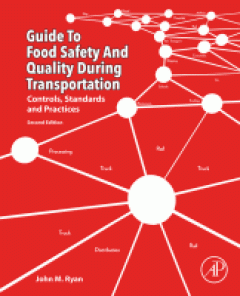
Guide to Food Safety and Quality During Transportation
Guide to Food Safety and Quality during Transportation, Controls, Standards and Practice, Second Edition provides a solid foundation outlining logistics and delivery control solutions to protect the food transportation industry. Since its first publication, the U.S. FDA has finalized a number of Food Safety Modernization Act rules designed to improve the protection of the public from adulterant…
- Edisi
- -
- ISBN/ISSN
- 978-0-12-812139-9
- Deskripsi Fisik
- -
- Judul Seri
- -
- No. Panggil
- -

Gluten-Free Ancient Grains
Gluten-Free Ancient Grains: Cereals, Pseudocereals and Legumes covers grains that are not related to wheat. This includes sorghum, the major millets - pearl, foxtail, proso and finger millet, as well as teff, the major pseudocereals - quinoa, amaranth and buckwheat, and emerging legume grains - lupin, cowpea, Bambara groundnut and marama beans. These are all characterized as gluten-free grains.…
- Edisi
- -
- ISBN/ISSN
- 978-0-08-100866-9
- Deskripsi Fisik
- -
- Judul Seri
- -
- No. Panggil
- -

Foodborne Diseases
Foodborne Diseases, Third Edition, covers the ever-changing complex issues that have emerged in the food industry over the past decade. This exceptional volume continues to offer broad coverage that provides a foundation for a practical understanding of diseases and to help researchers and scientists manage foodborne illnesses and prevent and control outbreaks. It explains recent scientific and…
- Edisi
- -
- ISBN/ISSN
- 978-0-12-385007-2
- Deskripsi Fisik
- -
- Judul Seri
- -
- No. Panggil
- -
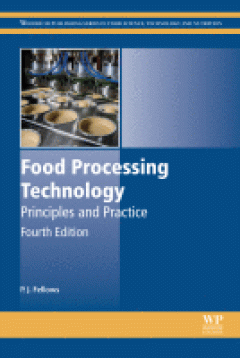
Food Processing Technology
Food Processing Technology: Principles and Practice, Fourth Edition, has been updated and extended to include the many developments that have taken place since the third edition was published. The new edition includes an overview of the component subjects in food science and technology, processing stages, important aspects of food industry management not otherwise considered (e.g. financial man…
- Edisi
- -
- ISBN/ISSN
- 978-0-08-101907-8
- Deskripsi Fisik
- -
- Judul Seri
- -
- No. Panggil
- -

Food Preservation
Food Preservation, Volume Six, the latest in the Nanotechnology in the Agri-Food Industry series, discusses how nanotechnology can improve and control the growth of pathogenic and spoilage compounds to improve food safety and quality. The book includes research information on nanovesicles, nanospheres, metallic nanoparticles, nanofibers, and nanotubes, and how they are capable of trapping bioac…
- Edisi
- -
- ISBN/ISSN
- 978-0-12-804303-5
- Deskripsi Fisik
- -
- Judul Seri
- -
- No. Panggil
- -

Food Microstructure and Its Relationship with Quality and Stability
Food Microstructure and Its Relationship with Quality and Stability is a comprehensive overview of the effects that the properties of the underlying structures of food have on its perceived quality to the consumer. The book's first section consists of chapters outlining the fundamentals of food microstructure, food composition, molecular mobility of various food constituents, and their relat…
- Edisi
- -
- ISBN/ISSN
- 978-0-08-100764-8
- Deskripsi Fisik
- -
- Judul Seri
- -
- No. Panggil
- -

Food for the Aging Population
Food for the Aging Population, Second Edition, is a unique volume that reviews the characteristics of the aging population as food consumers, the role of nutrition in healthy aging, and the design of food products and services for the elderly. The first section of the book discusses the older population as consumers of food and beverages, while the second section covers the extension of functio…
- Edisi
- -
- ISBN/ISSN
- 978-0-08-100348-0
- Deskripsi Fisik
- -
- Judul Seri
- -
- No. Panggil
- -

Food Biosynthesis
Food Biosynthesis, Volume One in the Handbook of Food Bioengineering series, describes the main aspects related to the biological production of synthetic ingredients and natural foods, highlighting the impact of bacteria and plants in the biosynthesis of key food components. Biosynthesis methods could help solve issues like food shortages, providing consumers with preferred ‘natural’ food o…
- Edisi
- -
- ISBN/ISSN
- 978-0-12-811372-1
- Deskripsi Fisik
- -
- Judul Seri
- -
- No. Panggil
- -

Food Bioconversion
Food Bioconversion, Volume Two in the Handbook of Food Bioengineering series is an interdisciplinary resource of fundamental information on waste recovery and biomaterials under certain environmental conditions. The book provides information on how living organisms can be used to transform waste into compounds that can be used in food, and how specialized living cells in plants, animals and wat…
- Edisi
- -
- ISBN/ISSN
- 978-0-12-811413-1
- Deskripsi Fisik
- -
- Judul Seri
- -
- No. Panggil
- -
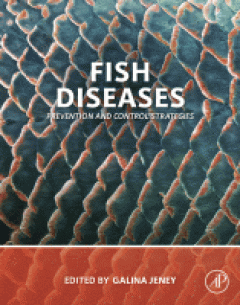
Fish Diseases
Fish Diseases: Prevention and Control Strategies provides essential information on disease prevention and treatment by the most experienced fish culturists in the industry. The book presents both traditional and novel methodologies of identifying and addressing fish disease risk, along with preventative and responsive insights to the challenges impacting fish production today. Both specific …
- Edisi
- -
- ISBN/ISSN
- 978-0-12-804564-0
- Deskripsi Fisik
- -
- Judul Seri
- -
- No. Panggil
- -
 Karya Umum
 Filsafat
 Agama
 Ilmu-ilmu Sosial
 Bahasa
 Ilmu-ilmu Murni
 Ilmu-ilmu Terapan
 Kesenian, Hiburan, dan Olahraga
 Kesusastraan
 Geografi dan Sejarah