Ditapis dengan
# Debug Box
/home/perpus69/public_html/lib/SearchEngine/DefaultEngine.php:610 "Search Engine Debug 🔎 🪲"
Engine Type ⚙️: "SLiMS\SearchEngine\DefaultEngine"
SQL ⚙️: array:2 [
  "count" => "select count(distinct b.biblio_id) from biblio as b left join mst_publisher as mp on b.publisher_id=mp.publisher_id left join mst_place as mpl on b.publish_place_id=mpl.place_id where b.opac_hide=0 and (b.biblio_id in(select ba.biblio_id from biblio_author as ba left join mst_author as ma on ba.author_id=ma.author_id where ma.author_name like ?))"
  "query" => "select b.biblio_id, b.title, b.image, b.isbn_issn, b.publish_year, mp.publisher_name as `publisher`, mpl.place_name as `publish_place`, b.labels, b.input_date, b.edition, b.collation, b.series_title, b.call_number from biblio as b left join mst_publisher as mp on b.publisher_id=mp.publisher_id left join mst_place as mpl on b.publish_place_id=mpl.place_id where b.opac_hide=0 and (b.biblio_id in(select ba.biblio_id from biblio_author as ba left join mst_author as ma on ba.author_id=ma.author_id where ma.author_name like ?)) order by b.last_update desc limit 10 offset 0"
]
Bind Value ⚒️: array:1 [
  0 => "%Alexandru Mihai Grumezescu%"
]
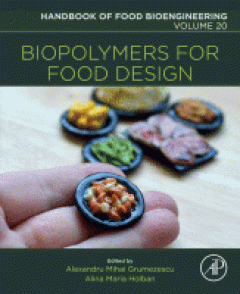
Biopolymers for Food Design
Biopolymers for Food Design, Volume 20 in the Handbook of Bioengineering series, describes how biopolymers have made a major impact in the food industry, from food design, to food control and safety. Biopolymers can be used in the development of novel nutritional alternatives, to replace difficult to obtain food products, or for foods inaccessible or inappropriate for a particular population (i…
- Edisi
- -
- ISBN/ISSN
- 978-0-12-811449-0
- Deskripsi Fisik
- -
- Judul Seri
- -
- No. Panggil
- -
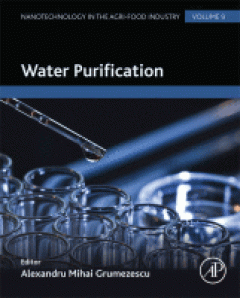
Water Purification
Water Purification, a volume in the Nanotechnology in the Food Industry series, provides an in-depth review of the current technologies and emerging application of nanotechnology in drinking water purification, also presenting an overview of the common drinking water contaminants, such as heavy metals, organics, microorganisms, pharmaceuticals, and their occurrences in drinking water sources. …
- Edisi
- -
- ISBN/ISSN
- 978-0-12-804300-4
- Deskripsi Fisik
- -
- Judul Seri
- -
- No. Panggil
- -
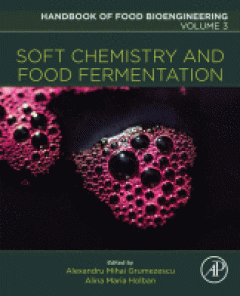
Soft Chemistry and Food Fermentation
Soft Chemistry and Food Fermentation, Volume Three, the latest release in the Handbook of Food Bioengineering series is a practical resource that provides significant knowledge and new perspectives in food processing and preservation, promoting renewable resources by applying soft ecological techniques (i.e. soft chemistry). Fermentation represents a simple and very efficient way to preserve fo…
- Edisi
- -
- ISBN/ISSN
- 978-0-12-811412-4
- Deskripsi Fisik
- -
- Judul Seri
- -
- No. Panggil
- -

Nutrient Delivery
Nutrient Delivery: Nanotechnology in the Agri-Food Industry, Volume Five, discusses the fabrication, merits, demerits, applications, and bioavailability enhancement mechanisms of various nanodelivery systems. Recent developments in various nanodelivery systems are also highlighted. Volume 5 contains twenty chapters, prepared by outstanding international researchers from Argentina, Brazil, Canad…
- Edisi
- -
- ISBN/ISSN
- 978-0-12-804304-2
- Deskripsi Fisik
- -
- Judul Seri
- -
- No. Panggil
- -

Ingredients Extraction by Physicochemical Methods in Food
Ingredients Extraction by Physico-chemical Methods, Volume Four, the latest release in the Handbook of Food Bioengineering series, reveals the most investigated extraction methods of ingredients and their impact on the food industry. This resource describes types of ingredients that may be extracted through physico-chemical methods (i.e. specific plants, fruits, spices, etc.), along with their …
- Edisi
- -
- ISBN/ISSN
- 978-0-12-811521-3
- Deskripsi Fisik
- -
- Judul Seri
- -
- No. Panggil
- -

Food Preservation
Food Preservation, Volume Six, the latest in the Nanotechnology in the Agri-Food Industry series, discusses how nanotechnology can improve and control the growth of pathogenic and spoilage compounds to improve food safety and quality. The book includes research information on nanovesicles, nanospheres, metallic nanoparticles, nanofibers, and nanotubes, and how they are capable of trapping bioac…
- Edisi
- -
- ISBN/ISSN
- 978-0-12-804303-5
- Deskripsi Fisik
- -
- Judul Seri
- -
- No. Panggil
- -

Food Biosynthesis
Food Biosynthesis, Volume One in the Handbook of Food Bioengineering series, describes the main aspects related to the biological production of synthetic ingredients and natural foods, highlighting the impact of bacteria and plants in the biosynthesis of key food components. Biosynthesis methods could help solve issues like food shortages, providing consumers with preferred ‘natural’ food o…
- Edisi
- -
- ISBN/ISSN
- 978-0-12-811372-1
- Deskripsi Fisik
- -
- Judul Seri
- -
- No. Panggil
- -

Food Bioconversion
Food Bioconversion, Volume Two in the Handbook of Food Bioengineering series is an interdisciplinary resource of fundamental information on waste recovery and biomaterials under certain environmental conditions. The book provides information on how living organisms can be used to transform waste into compounds that can be used in food, and how specialized living cells in plants, animals and wat…
- Edisi
- -
- ISBN/ISSN
- 978-0-12-811413-1
- Deskripsi Fisik
- -
- Judul Seri
- -
- No. Panggil
- -

Nutraceuticals
Nutraceuticals, the fourth volume in the Nanotechnology in the Agri-Food Industry series, is an invaluable resource for anyone in the food industry who needs the most current information about scientific advances in this field. Nutraceuticals are gaining significant attention because of their apparent safety, as well as their nutritional and therapeutic uses. Scientific indications have rein…
- Edisi
- -
- ISBN/ISSN
- 978-0-12-804305-9
- Deskripsi Fisik
- -
- Judul Seri
- -
- No. Panggil
- -
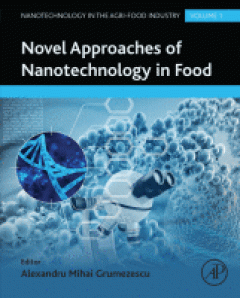
Novel Approaches of Nanotechnology in Food
Novel Approaches of Nanotechnology in Food, a volume in the Nanotechnology in the Agri-Food Industry series, represents a summary of the most recent advances made in the field of nanostructured materials that have significant impact on the agri-food industry. Because the current food market needs innovation, nanotechnology coupled with novel interdisciplinary approaches and processing methods h…
- Edisi
- -
- ISBN/ISSN
- 978-0-12-804308-0
- Deskripsi Fisik
- -
- Judul Seri
- -
- No. Panggil
- -
 Karya Umum
 Filsafat
 Agama
 Ilmu-ilmu Sosial
 Bahasa
 Ilmu-ilmu Murni
 Ilmu-ilmu Terapan
 Kesenian, Hiburan, dan Olahraga
 Kesusastraan
 Geografi dan Sejarah